Showing posts with label Wine. Show all posts

Wednesday, September 26, 2018

Borgo Moncalvo Brachetto d'Acqui 2016


Sorry I haven't done a wine post in awhile. Life got very hectic over the last few weeks. I was expecting to have a nice relaxing couple of weeks staying at Erik's house in North Carolina before I moved up to New Jersey to start my new job. Instead we ended up having to evacuate his house for Hurricane Florence and I headed up to New Jersey a week early and stayed with my parents. This weekend I moved in to my new apartment, and today I have my first day of orientation for my new job. I expect that now that I'm working full time with long lawyer hours I won't be able to be as consistent with my posting, but I still hope to be able to get at least three wine posts out each month. This week's wine is a sweet dessert wine that comes from the Piedmont region of Italy, Erik and I picked it up at Wine Authorities two or three months ago.. It comes from a tiny (only 5 acres) organically-farmed winery. The wine is made from 100% Brachetto grape, which is most commonly used to make this sweet wine. It's a very different type of sweet wine than Port or other common dessert wines. Instead of being fortified and somewhat syrupy, this sweet wine has only a 6.5% alcohol content, and it's made into a frizzante (slightly sparkling) wine similar to Lambrusco.


I served this wine chilled, which is how I typically serve sparkling red wines. When I poured myself a glass, it smelled very fruity, like strawberries, cherries, raspberries, and cranberries. The red fruit overwhelmed almost every other scent to the wine, except for a slight hint of nutmeg at the end. When I tasted the wine it matched the smell. It tasted very fruity and crisp, not like a typical syrupy dessert wine at all. I described it to Erik as tasting like cranberry juice with a splash of brandy poured in. In addition to the berry notes, there was a hint of cinnamon and nutmeg as I swallowed the wine. We paired this wine with almond cake topped with strawberries. It went so well with a light flavored cake and fruit, it would also go great with fresh raspberries or strawberries with cream or a strawberry mousse. It would definitely be better with lighter desserts than rich, heavy, or chocolatey desserts. I really enjoyed this wine. It has sweetness without syrup, which I appreciated, but it's not for everyone. Erik was not a big fan of it, but if you find that some dessert wines and Ports are too cloying or too sweet, then this sweet wine might be right up your alley instead.


Wednesday, September 5, 2018

Txakoli Akarregi Txiki 2017


Hey guys, so I'm completely done traveling (until I move up to New Jersey), I'm back from Europe and California, and back to my regular Wine Wednesday. I prefer to review wines that I drink at home, rather than when I'm out, because I feel like I can really take my time and focus on getting a better understanding of the wine when I'm at home. I'm not distracted by the ambiance of the bar or restaurant that I'm at, and I can drink the wine over the course of two days to see how it changes overnight. This week's wine is an effervescent white wine from Spain. We picked it up at Wine Authorities in Durham over a month ago, but didn't drink it until I got back from traveling. Notice that I described this wine as effervescent, not sparkling. The wine has a delightful slight fizz to it, but it doesn't have enough bubbles for it to be considered sparkling wine, instead it can only be called effervescent. The grape used to make this wine is Hondarrabi Zuri, it's found in the Basque region of Spain (the northern area that includes Bilbao and San Sebastian), and it's often used to make this effervescent style of wine. The grape is known to produce wines with strong minerality, which it gets from the Atlantic Ocean's influence over the soil in the Basque region. It's an interesting grape that produces a delightful wine.


I usually start with how the wine smells, but with an effervescent wine like this, how it sounds when it's opened is also interesting. The cork didn't pop like it does with Champagne or other true sparkling wines, it had to be removed with a corkscrew, but there was a slight hissing noise when it came out of the bottle. When I poured a glass of it, it sounded like pouring a can of soda that had been sitting open for an hour or two. It had some nice bubbles at the top without getting foamy. The wine smelled very bright and crisp. I got some citrus and tropical fruit scents, like lemon and pineapple, with a hint of grassiness on the back end. The taste of the wine matched the smell. There were notes of grapefruit, lemon, pineapple, guava, and grass, with a strong minerality on the back end. I could definitely taste the Atlantic Ocean from the soil in the wine. It was a great summer wine, very crisp and fruity, easy drinking, but not too sweet. We paired it with a spinach-pesto farro risotto and watermelon, and it complimented the spinach-pesto and the melon very well. It would also go great with any type of seafood, especially shrimp, or a pasta with fresh herbs.


Wednesday, August 15, 2018

Introduction to Portuguese Wine

I meant to post this last week, while I was in Porto, Portugal, but my wifi was kind of spotty and when I went to hit the publish button, it couldn't load enough to publish or save it, so the whole post got deleted and I was too tired from traveling all day to rewrite it. Currently I'm in La Linea, Spain and this afternoon I'm catching a ferry to Tangier, Morocco for a few days, but then I'm coming back up to Spain, and ending my trip in Lisbon, Portugal. Of the two Portuguese cities, Porto is more of a wine city because the Douro Valley, Portugal's major wine region, is located right outside Porto, and many Port wineries make some of their Port Wine in the city of Porto. One of the days that I was in Porto, I took a day long tour of the Douro Valley. The views were incredible and we had a chance to visit a Port winery located in the vineyards. The next day, while I was exploring the city of Porto, I stopped in a Port winery in the city, and did a tour of the facilities and a tasting. It was a great experience. There are a whole row of Port wineries along the river that goes through Porto, and I could have easily spent a whole afternoon hopping from one to another, tasting a bunch of different Ports. As an introduction to Portuguese wine, there are three main varietals/styles of wine that are commonly associated with Portugal: Port, Touriga Nacional, and Vinho Verde.


Port Wine

Port wine is a style of wine, not a varietal. It's a wine, most commonly a red wine, that's been fortified with alcohol, usually brandy. The extra alcohol is added during the fermentation process, and it affects the alcohol content and sugar content of the resulting wine. Port wine was first created on accident. In the 1600s, the British really enjoyed Portuguese wine, and they wanted to sent it over to England. However, they found that by the time the wine crossed the ocean, it had gone bad and wasn't suitable to drink. In an attempt to figure out a way around this problem, Portuguese wine makers tried adding brandy to the wine after the fermentation process. The wine survived the trip across the ocean, but the fortification changed the nature of the wine. Even though it was a different style of wine, the British loved the fortified Portuguese wine, and Port wine was born. Portuguese winemakers have since changed the process of making Port slightly, to make the wine better, but the idea of fortified wine is still the same.

The base wine that is used for Port doesn't have to be a particular varietal, it's generally a blend of various red wines. For a wine to be considered a Port wine, it must be fortified, and it must come from the Douro Valley. Any fortified wine that doesn't come from the Douro Valley technically can't be labeled as Port. It's like how any sparkling wine that's not from the Champagne region in France technically can't be called Champagne. There are two main types of red Port wines, Ruby and Tawny. Ruby Ports are the color of normal red wine, they generally have stronger berry and chocolate flavors than Tawny. They are aged in a large oak vat, so that the wine has less actual contact with the oak, which leads to the brighter color and flavor. Tawny Ports, however, are aged in much smaller oak vats, so that the wine has more direct contact with the oak. This results in the wine having more of an amber color, and the flavor tends to have more caramel and toffee notes. Port has a higher alcohol content than normal wine, and it's much sweeter and more viscous. It's generally served after dinner, either with dessert or as the dessert on it's own, and is served in a much smaller glass than a typical wine glass. In Portugal, it's generally saved for special occasions, when friends and family are all together.

Touriga Nacional

Touriga Nacional is a Portuguese grape varietal. It's often considered Portugal's finest varietal. It's a red grape that's often used in blends that become Port wine, but in the past decade or so, it has gained popularity as a grape to be used for making normal wine as well. It's grown mostly in the Dao region and the Douro Valley. It's a low yield grape, meaning that fewer grapes are produced on each vine, but that can actually lead to an increase in the quality of the grape. When there are fewer grapes on a vine, each grape can get more nutrition and resources from the vine, so the grapes can end up more well fed, which leads to better wine. Touriga Nacional is often compared to Cabernet Sauvignon. I find it to be just as bold and juicy as many California Cabs, but smoother and less rough around the edges on the back end.

Vinho Verde

Vinho Verde is another style rather than varietal. It directly translates to "green wine," with green meaning young, so Vinho Verde is young, or early, wine. It's wine that is released 3-6 months after the grapes are harvested, meaning that it hasn't really aged. Vinho Verde can be white, red, or rose, and it's generally effervescent, or just slightly sparkling. White Vinho Verde tastes like a typical crisp and fresh white wine. If you like Sauvignon Blanc you'll probably like white Vinho Verde. Red Vinho Verde can be a little more interesting. It can also have a crispness and a minerality to it, which generally isn't associated with red wine. I bought a bottle of red Vinho Verde a few months ago in Durham, and I paired it with clam linguine. The saltiness and the clam taste that's a bit heavier than typical shellfish, was a good pairing for the bright and minerally red. Like Port, Vinho Verde can only be called Vinho Verde if it's grown in a specific region of Portugal. This region is in the northern part of the country, where the Minho province and its surrounding areas once were.


Wednesday, August 1, 2018

Introduction to Spanish Wine

In honor of my trip to Spain, Portugal, and Morocco this month, I've decided to something a little bit different this week, and instead of reviewing a specific wine, I'm going to go through an introduction to Spanish wine. I was originally supposed to be posting this from Barcelona, and it was going to be a fun post about Spanish wine while I'm in Spain, but yesterday my flight got delayed multiple times and eventually cancelled, so now I'm flying out to Barcelona today. The most common Spanish wine varietals and Tempranillo and Garnacha for red wine, and Albarino for white wine. There are other grapes grown in Spain, such as Syrah and Merlot, but they aren't as uniquely Spanish.


Tempranillo

Tempranillo is a red grape, mostly grown in the Rioja region. It's grown in small quantities elsewhere in Spain, but so much of it is grown in Rioja that the region and the varietal can sometimes seem synonymous. The name Tempranillo comes from the Spanish word for early, because the grape ripens earlier in the season than other Spanish wine grapes. It's an incredibly old grape, it's thought that it was brought to Spain by the Phoenicians over 3,000 years ago. It has stuck around so long because it grows so well in Spain and makes delicious wine. Tempranillo is a relatively bold red wine. Tempranillo is generally juicy, with strong notes of dark berry, cherry, and figs, with a bit of a spicy finish of tobacco, pink peppercorn, and cedar. It ages well, and the flavor profile drastically changes with age. Young Tempranillo can have much brighter fruit notes, while older Tempranillo gets very oaky and leathery. It pairs well with cured meats and hearty pasta dishes.


Garnacha

Garnacha, also known as Grenache in other regions, is also heavily grown in France, but it's one of Spain's most common red varietals. Garnacha is generally grown in Northern Spain. Since it's a bit colder there than in Rioja, Garnacha ripens later in the season than Tempranillo. The grapes generally have a higher sugar content, which leads to a higher %ABV, Spanish Garnacha can get to above %15 alcohol. It has brighter fruit notes than Tempranillo, with some citrusy grapefruit notes in addition to more typical berry and cherry notes. It's also relatively spicy and fuller bodied, partially due to the high alcohol content. Garnacha is frequently blended with other grapes, like Syrah, so it's harder to find a pure Garnacha than it is to find a pure Tempranillo. It pairs well with roasted meats and vegetables.


Albarino

Albarino is a really interesting white wine. If you like Sauvignon Blanc, I encourage you to try a glass of Albarino the next time you see it on a menu. It grows in the Rias Baixas region of Spain. This is a cooler region that's closer to the Atlantic Ocean, so the saltwater of the ocean gives the grapes strong minerality. It's a highly aromatic wine, with strong citrus, bright herb and floral notes. It's a more acidic and fresh white wine. The minerality and the brightness makes it great to pair with fresh seafood, and also some asian food, such as Pad Thai.


Wednesday, July 25, 2018

2017 Ameztoi Txakolina Rubentis Rose


Malinda is taking the bar this week, so it's Erik (fiancé/sometimes photocred deserver) here with a guest post on what's probably my favorite wine right now: the 2017 Ameztoi Txakolina Rubentis Rose.

For anyone who isn't familiar with txakolina (or txakoli or txakolin depending on who you ask), which included me until a few months ago, it usually a slightly sparkling dry white wine from the Basque Country. Traditionally, it's served with pintxos before a meal. It's also traditionally poured into the glass from height, which helps bring out the aromas and is a lot of fun to do. Oh, and sometimes you drink it from a porron (see right), which is basically a wine bag but for good wine.


This txakolina is somewhat unusual in being a rose, which is also what makes it absolutely delightful. It carries aromas of lemon peel with some faint minerality. Drinking it, I definitely got those same citrus notes, along with strawberries and slate. The vineyard is on a hillside on the coast, and the wine absolutely reflects that.

As a fairly light wine, I would absolutely recommend having this while sitting on a porch or by the pool on a summer evening, or perhaps with some light appetizers with some friends while dinner is cooking. That being said, it was raining in eastern North Carolina all week because the weather here is garbage, so I had the wine with dinner this time around.


I can be fairly indecisive, so I made salmon two ways - grilled and seared with sweet thai chili sauce (from a recipe in Mayor of the Internet Chrissy Teigen's first cookbook). The wine held up better than I had expected to the heat in the chili salmon, so you can certainly serve the wine with dinner. And at 10.5% alcohol, it's not going to knock you out when you go back to finish the bottle.


I first had this wine at a tapas restaurant where it was on special. After my first sip, I asked the waiter for the name of the wine, and found out it was for sale at Wine Authorities. I bought two bottles the next day and have since bought a few more.  The winemaker is a fourth-generation family affair on the norther coast of Spain, just west of San Sebastian. They also make a semi-sparkling white wine, which is also excellent (my strong bias towards rose led me to review this one instead), as well as semi-sparkling red and sparking white and rose.
Wednesday, July 18, 2018

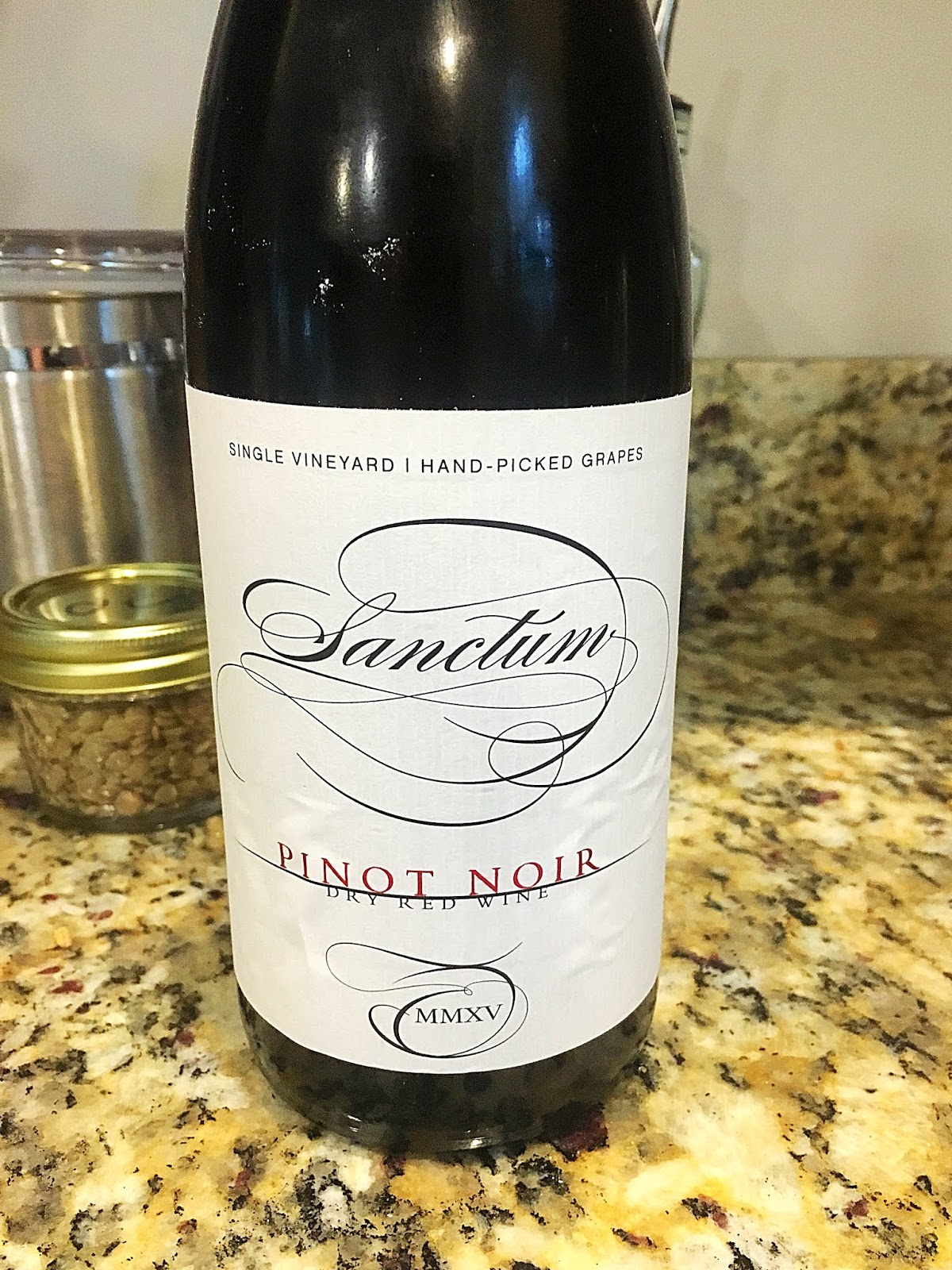
Sanctum Pinot Noir 2015


This week's wine is a Slovenian Pinot Noir that I picked up from Bar Brunello, my favorite wine bar. Erik and I went to an Eastern European wine tasting at the wine bar a little over a month ago, and this was my favorite wine that we tasted. Slovenian wine is incredibly underrated. There are so many incredible and affordable Slovenian wines out there, because it's not a particularly well-known region, you can find some really high quality wines for really cheap. Slovenia is right next to Northern Italy, and it has a similar climate. If you like Italian wine, you'll probably love Slovenian wine. Wine has actually been made in Slovenia for longer than it's been made in Spain and France, but it's just not a well-known country. There are three main wine regions in Slovenia: the Littoral Region, the Lower Sava Region, and the Drava region. The Littoral region specializes in Merlot-Cabernet blends and Pinela and Zelen white wines, which are local grapes that make a crisp and somewhat delicate white wine. The Lower Sava region tends to make more table wine, which is generally lower quality than the other two regions. The Drava region is the largest of the three region, and almost all the wine produced in the region is white wine.


This particular Pinot Noir is from the Drava region. It's one of the few red wines grown in the area. It comes from an area where Chardonnay and Pinot Noir grapes have been growing since the 12th century, when French monks settled there and planted the grapes. When I poured my glass of wine, the first thing that I noticed was the gorgeous amber tint to the color of the wine. It's a very unique color for red wine, sometimes I see very deep purpley red wine, but rarely do a see a more amber shade of red. When I stuck my nose in the glass to smell the wine, I picked up a delicate floral scent, with a hint of berry and oak on the back end, but florals, especially violet and lavender, were definitely the primary scent. The taste of the wine matched up with the scents. It was a very delicate but still complex wine. The florals were the primary flavor as well as scent, and it was a strong flavor that stood of well to the slight aftertaste of oak and pink peppercorn. This was one of my favorite Pinot Noirs that I've had in awhile. I paired it with grilled salmon and roasted carrots. I love pairing a delicate and light red wine with salmon. Traditionally fish pairs better with white wine, but salmon is a richer and meatier fish, so a light red wine holds up well to it. This wine would also pair well with a cheese and charcuterie plate or a butternut squash dish in the fall.


Wednesday, July 11, 2018

2016 Far + Wide Frappato


This week's wine is a Winc wine. It's a 2016 Frappato, which is a grape native to Sicily. It's a relatively hard to find grape, and is typically blended Nero d'Avola to make a more commonly found Sicilian wine, Cerasuolo di Vittoria. The Frappato grape makes a relatively light-bodied wine, and it's closely related to the Sangiovese grape, so if you like Sangiovese wine you would likely like Frappato as well. This particular Frappatio is very interesting because it was grown near Mt. Etna. The volcanic soil in the region can really effect how the wine ends up tasting. It's what the French refer to as terroir; how the soil, climate, and environment can have a larger impact on the taste and smell of the wine than the grape varietal used. For example, grapes grown in soil that contains a lot of slate or limestone can produce wines that have more minerality than the same grape varietal grown in an earthier soil. Grapes grown in the Mt. Etna region produce wines that have a distinct volcanic taste and smell to them. They tend to be smokier and more peppery than a typical wine of the varietal. These smoky, volcanic notes are really interesting when found in a lighter, more delicate wine. It adds an unexpected complexity to the wine. One of my favorite wines is Etna Rosso, which is a wine made primarily from the Nerello Mascalese grape, and it comes from the Mt. Etna region. It's delicate and floral, like a Pinot Noir, but has that volcanic depth to it that makes you really stop and taste the wine in an effort to understand it. It's a wine that makes you think. Because of how much I've enjoyed Mt. Etna wines in the past, I was very excited to open this bottle of Mt. Etna Frappato.


This was a really interesting wine to smell and taste. When I sniffed it I got notes of bright red fruit, like red cherries and raspberries, and the slight burn of pink peppercorn in the back of my nose. The pepperiness was very consistent with the Mt. Etna region. When I sipped the wine I got stronger notes of red fruit, plum and a hint of cranberry in addition to the cherry and raspberry, but the pepperiness quickly overwhelmed the fruit and blended with a smokey note that I was expecting. Surprisingly, there was a bit of an herbal aftertaste to mellow out the pepperiness. I got very subtle notes of rosemary and thyme after I swallowed the wine. It was a very dynamic and interesting wine, that was still relatively approachable and easy to drink. It wasn't as delicate as Etna Rosso, it didn't have the same level of juxtaposition because it wasn't as floral, but it was still a very interesting wine. I paired with a turkey burger and grilled zucchini. The charred zucchini held up great to the pepperiness, but the turkey wasn't quite a strong enough meat for the wine. I think it would go great with a meat lasagna or baked ziti, something hearty and very Italian.


Wednesday, July 4, 2018

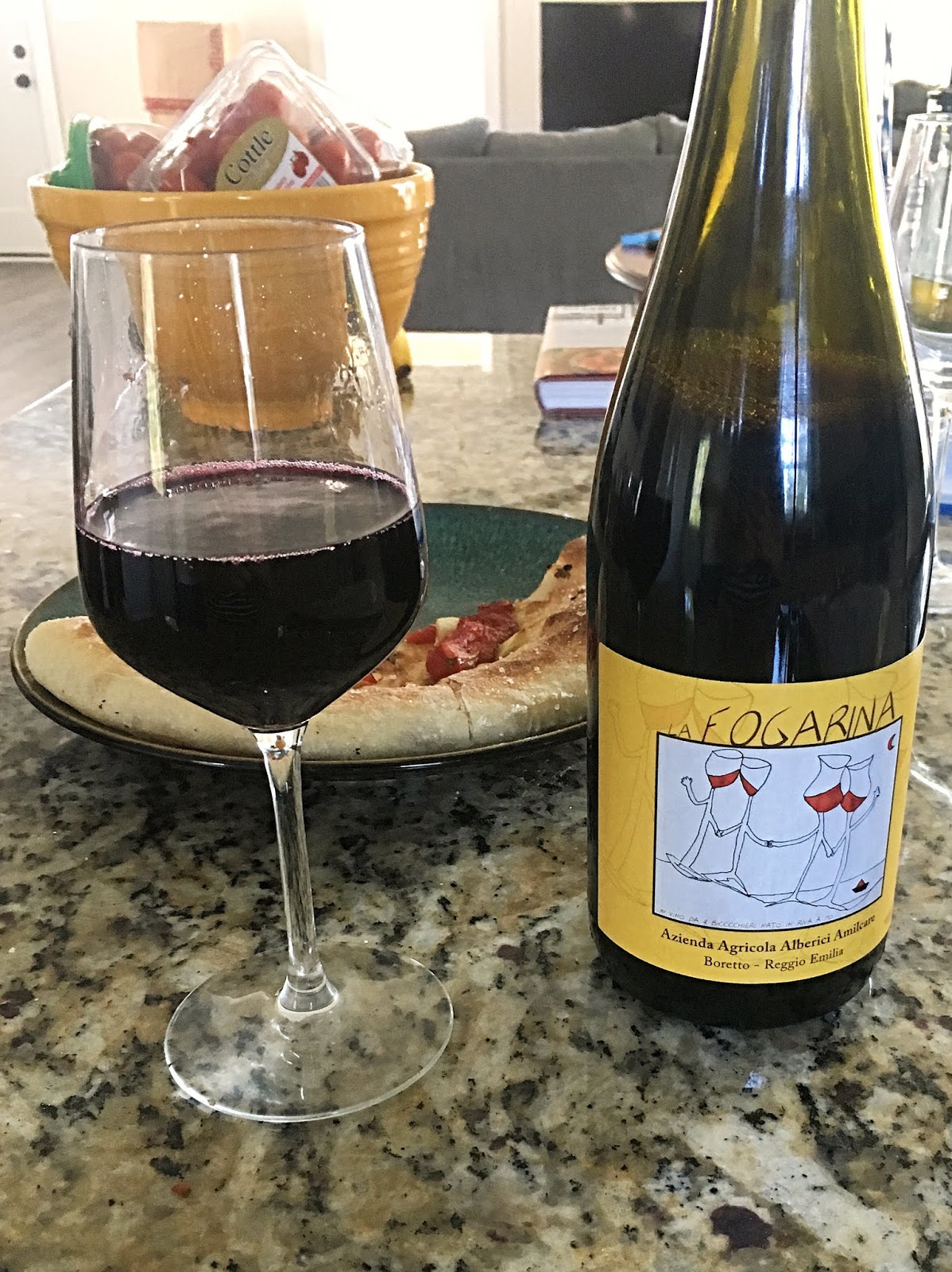
Lambrusco Rosso La Fogarina


This week's wine is a Lambrusco made from the Lambrusco di Fogarina grape. Lambrusco is an Italian semi-sparkling red wine. It can get kind of a bad reputation, because when it's not made well or not made properly, it can be overly sweet and taste for like a soda than a wine. Some "big box" wine producers put in added sugars on purpose, to make it unnaturally sweet, so that it's approachable for people that don't really drink wine. When Lambrusco is properly made, it doesn't have any excess sugar and isn't any sweeter than the average red wine. I picked up this Lambrusco at Wine Authorities, because I could trust them to only stock delicious, authentic Lambrusco.


Lambrusco is a fun wine. It's one of the few types of sparkling red wine, and it's generally served at a colder temperature than most red wines, so it's incredibly refreshing on a summer day. A few months ago I wrote about a sparkling wine made using the traditional French method, and noted that there are different methods of making different types of sparkling wine. Lambrusco is made using the Tank Method, which is also used to make Prosecco. The main difference between the two methods in where the second fermentation occurs. In the traditional french method, the second fermentation happens after the wine has been bottled, in the tank method, it happens in a large tank. After the base wine is made, the wine is added to a large tank with a sugar and yeast mixture. The sugar and yeast cause the wine to ferment again, and the carbon dioxide released during this second fermentation is what causes the bubbles that make the wine sparkling. After the wine has fermented, it's bottled without aging. This means that Proseccos and Lambruscos tend to have a younger, brighter taste than Champagne.


I drank this wine with Erik, and we paired it with some homemade pizza. When Erik took a sip of the wine, he said that it tasted "fun," which is a pretty good way to describe Lambrusco. When you pour the wine it immediately fizzes up with a delightful pinking-purple bubbly head, and then mellows down to semi-sparkling pretty quickly. When I smelled it, I picked up notes of tart cranberry and a hint of cinnamon. When I tasted the wine, it matched up pretty well to the smell. I got notes of the cranberry still, along with slightly not ripe yet red cherry, and rhubarb, and got a taste of star anise of the back end with the cinnamon, and just a touch of minerality. It's a very refreshing and almost tangy red wine. We paired it with pizza, and it was a fun pairing, very tasty. Lambrusco would also be a great pre-dinner wine with a cheese and charcuterie plate, sort of like an alternative to a sparkling rose.

Wednesday, June 20, 2018

2016 Tempo Vero Negroamaro


Hey guys, I'm so sorry that I missed Wine Wednesday last week. I had the stomach flu for most of last week, so I wasn't really feeling up to drinking any wine. It's a sad day when the smell of wine makes me sick to my stomach. Luckily I'm totally recovered now and feeling much better. This week's wine is a Negroamaro that I got through my Winc wine subscription*. This wine is from Southern Italy, specifically in Salento, which is part of the heel of Italy's "boot." You may not have heard of the Negroamaro varietal before, because it's more commonly used in blends than used on its own as a single grape wine. It's commonly found in Sangiovese and Montepulciano blends, which are strong, bold, and hearty Italian blended wines.


Negroamaro has an interesting history. It was most likely brought from Greece to Italy in the 8th century B.C., and famous Ancient Greek philosophers, politicians, and writers, including Pliny the Elder, have positively referenced the grape and the wine in their work. Since being brought to the Salento area, the grape has pretty much stayed there are isn't really grown anywhere else in the world. The name Negroamaro translates to black-black, with Negro being Latin and Amaro being Greek. This is likely because it's a very dark grape, and makes dark wine.


This wine was a very bold and rich wine. When I smelled it I got notes of dark fruits, like black cherry and plum, and a hint of a peppery spiciness. How it tasted matched how the wine looked and smelled. It was fruit forward, with blackberry and currant notes in addition to the black cherry and plum notes that I had smelled. The fruitiness was balanced against spicy back end notes. The pepperiness was still there, but there was also a hint of nutmeg and ginger. The wine had medium-strong tannins and it was very well balanced. It had a silky texture in the mouth. I paired this wine with chicken parmesan and grilled zucchini. It went great with the chicken, but the zucchini was a bit too delicate for the wine. It would go better with heartier vegetables, like carrots, tomatoes, or mushrooms. This wine would also go great with prosciutto, or a beef lasagna. It's a bold wine that stands up well to hearty dishes without overwhelming them.


*If you're interested in trying a free month of Winc, leave or email address in a comment, or message me your email address on instagram, and I can give you a code for a free month.

Wednesday, June 6, 2018

2017 La Coqueluche Rose


This week's wine is another Trader Joe's great value wine. It's a rose from Languedoc region in Southeast France. La Coqueluche translates to "the favorite," and I could see how this could quickly become someone's favorite every day, easy drinking rose. As rose wine has become more popular over the past decade or so, Languedoc has capitalized on that, and has become a big rose region in France, similar to Provence. This bottle doesn't indicate which grape varietals were used to make the rose, but based on the red grapes that Languedoc is known for growing, we can hazard a guess. Langudeoc primarily grows Syrah, Grenache, Mourvedre, Cinsault, and Carignan. Syrah, Grenache, and Cinsault are pretty common in dry rose blends, so I would guess that this bottle is either a blend of all three, or a blend of Syrah and Cinsault.


Languedoc is an interesting wine region to watch right now, because there's a new generation of winemakers that are coming from outside the region, and have chosen Languedoc as the place where they want to make wine, and they are making changes and trying new things in the region. Some of these new winemakers are helping Carignan make a comeback. As I mentioned in a post a couple months ago, Carignan has long been considered just a table wine, nothing special, but these new and young winemakers are starting to make Carignan wine that's complex and interesting, putting the grape back on the map. Young winemakers are also creating new appellations, sub-regions, in Languedoc. They're planting vineyards in parts of the region that haven't traditionally been used for wine growing, such as Picpoul de Pinet, where wine grapes are grown in oyster beds by lagoons. Keep an eye out for Languedoc wines in the coming years, as the region continues to grow and change.


This rose was a very easy-drinking wine. It was smooth and not too complex, fruity without being sweet. When I smelled the wine, it smelled like watermelon and strawberries, with a hint of saltiness on the back end. The flavor profile of the wine matched up with how it smelled. When I tasted it, it was fruit forward with notes of watermelon, strawberry, apricot, with a hint of citrus, and medium-strength minerality on the back end. It was a flavorful wine that held it's own, while still being incredibly easy to drink. This was a good rose, not a particularly interesting one, but a good one. If I had friends coming over for a backyard barbecue sometime this summer, I would buy this rose in bulk to serve. It tastes delicious, but it's not there to impress. Erik and I paired this wine with a scallop paella, and they went together beautifully. The rose was strong enough to stand up to the hearty rice and the sauce, while still delicate enough to play well of the scallops. It was a delicious pairing.